The examined life
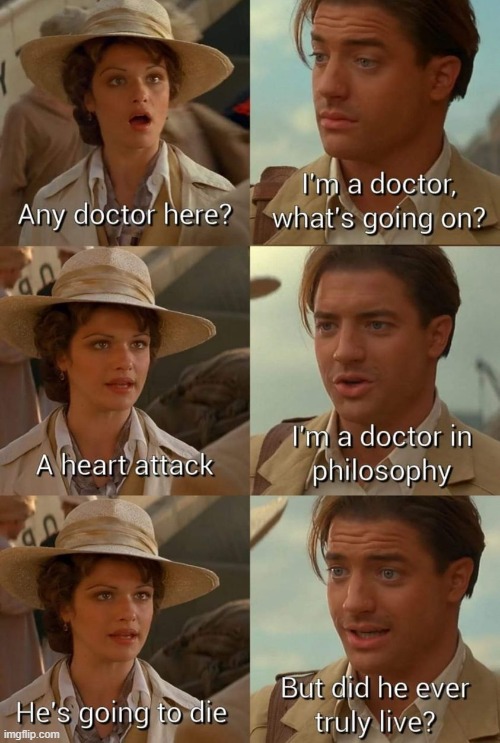
Socrates once said, “An unexamined life is not worth living.” But what does it truly mean to examine life?
To examine life is to awaken from autopilot—to live deliberately rather than drift passively through inherited assumptions and societal expectations. It means turning inward, questioning deeply, and choosing to live authentically, on our own terms, with awareness and intention.
The Buddha examined life and uncovered its true nature: it is impermanent, unsatisfactory, conditioned, and fabricated. He did not just observe the world—he observed the mind, and saw that the roots of our suffering lie in our reactions to experience.
And so, the examination of life begins with examining the mind.
The sense of I, me, and mine arises as a reaction, clinging to what is pleasant and pushing away what is unpleasant. But in truth, 98% of our daily life is neutral. We overlook it. Think of the thousand discomforts that are not happening to you right now: no stomachache, no fever, no thirst, no nausea, no fatigue. Your mind isn’t weighed down by the dread of exams or the fear of unemployment. Yet, one single fear or craving may be dominating your awareness, and that becomes your whole world.
You may have experienced a thousand joys in your body and mind, but you ache for the one that you lack. This is how we live—haunted by one pain, entranced by one pleasure—while the vast field of neutral experience passes unnoticed. We are present only for the extremes, and absent for the immense in-between.
To reclaim our life, we must turn our attention to this unclaimed space. Mindfulness brings curiosity to the neutral, awareness to the unnoticed, and meaning to what seems mundane. It is in this conscious engagement with all of experience—not just the peaks and valleys—that we find power, clarity, and presence.
This is the examined life: one lived purposefully, meaningfully, not as a domesticated being trained by the world’s carrots and sticks, but as a free and awake human being. For those without purpose, pleasures are mere distractions. But for one who examines life, pain and pleasure become teachers, not masters.
Let us seek a purpose greater than pleasure and deeper than pain. That is the essence of the examined life.


.jpeg)


.jpg)
Comments
Post a Comment